

In-play prices can move before a broadcast catches up. The clock on a screen, the bookmaker?s market state and ticket acceptance time are separate.
Fast-moving game state
The price is moving with the game state
A football interception, basketball foul sequence, or hockey empty net can shift expected outcomes. In-play models process the clock and scoreboard along with market activity; a displayed line can be outdated milliseconds later.
An appealing quote is not an executable price until the book accepts the ticket. A refresh can change both odds and handicap.
Broadcast video is not a real-time clock
Cable, streaming, arena feeds, and data vendors transmit events at different speeds. A viewer watching a delayed stream may react to information the pricing system has already processed.
A scoreboard that appears behind the offer creates an informational disadvantage, not a hidden opportunity.
Time remaining is not the same as opportunities remaining
A basketball total with four minutes left cannot be read from the game clock alone. The scoring opportunities left in the game depend on possessions, pace, fouls, turnovers, timeouts and whether the trailing team changes its strategy. A stopped clock does not produce the same information as a completed possession.
4:00 left in regulation describes elapsed game time, not how many shots will occur.
A three-point margin can lead to different endgame tactics than a twenty-point margin.
Possessions and free throws can cluster during stopped-clock sequences, while a slow possession can consume a substantial share of the remaining clock.
The same problem appears in football when a clock runs after certain plays but stops after others. A number shown on screen is only one part of the state used to interpret a live spread or total. The current price is not evidence that a remaining-time estimate is accurate.
Why feeds are not synchronous
Why acceptance delays exist
Live platforms can pause ticket acceptance to verify game state and screen out stale prices. A delay may end in acceptance, re-quote, or rejection. That is separate from a network failure or account error.
The accepted receipt, not the briefly displayed draft price, determines the contract.
Three clocks in one in-play decision
An in-play order involves at least three timestamps: the time of the sporting event, the time a feed displays the event, and the operator’s recorded acceptance time. They are not interchangeable.
- 8:41:10What happened: A goal is scored on the field; What the time can establish: Sporting event timestamp;
- 8:41:17What happened: A delayed stream shows the goal; What the time can establish: Viewer display time;
- 8:41:19What happened: An order status changes to accepted or rejected; What the time can establish: Operator-controlled ticket status;
These times are invented to demonstrate a seven-second video delay, not measured latency at any broadcaster or sportsbook. An order displayed as “pending” is not a settled record of acceptance. A completed ticket history and the applicable rules are the relevant artifacts in a disputed live-market sequence.
A short sequence with three different timestamps
At 8:42:10 a viewer sees a team leading by four on a delayed stream. At 8:42:13 the wager screen displays -115 on the live spread; at 8:42:16 a possession change triggers a market pause. A press of the submit button at 8:42:14 does not prove that -115 was accepted. The operator ledger may record a later acceptance, a different price requiring approval or no accepted wager at all.
That distinction also matters when reviewing losses. An unsuccessful attempt to place a live bet does not belong in a list of settled bets. Keeping screenshot time, ticket number and accepted timestamp separate reduces mistaken narratives about vanished prices or impossible wins. The broadcast clock is an entertainment reference, not the official settlement record.
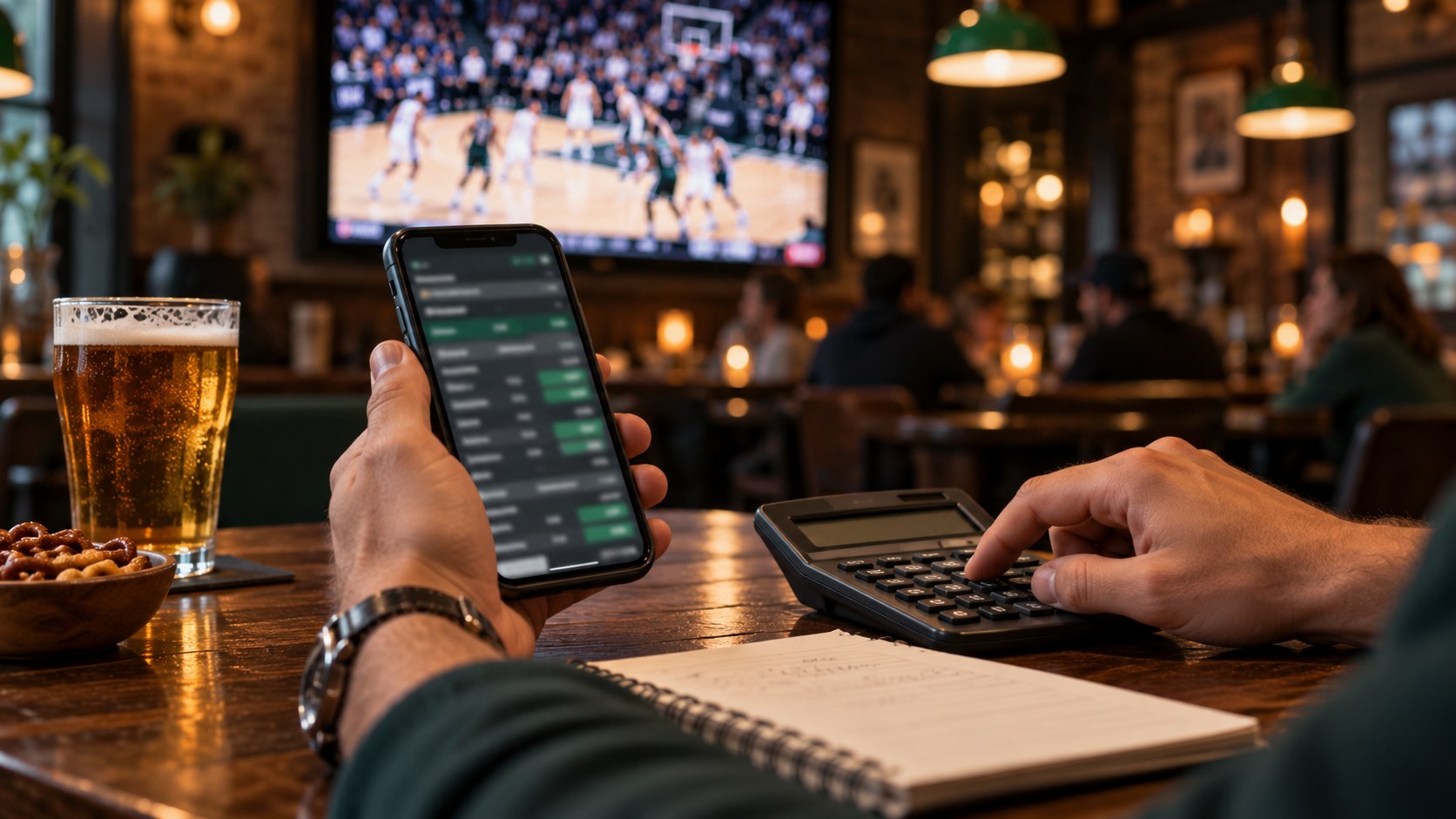
A selection that arrives after a whistle
Suppose a basketball team trails by six with two minutes remaining. A three-pointer, an intentional foul, and a timeout can change the remaining possessions and the total. Two spectators watching different streams might believe they are seeing the same moment while their feeds differ by several seconds. The app’s accepted price reflects its own data stream and control checks, not either spectator’s recollection.
In a disputed ticket, the accepted receipt, official box score, and market settlement terms are more useful than the delayed broadcast screenshot.
Acceptance and market pauses
Suspensions around consequential plays
Markets may close during free throws, video reviews, penalties, possession changes, or final attempts. Operators reopen them when pricing information is stable enough for their rules.
A suspended market is not evidence of a manipulated result. The temporary gap can simply reflect uncertainty about the next verified state.
Micro-markets and short horizons
Next-score or next-drive outcomes settle quickly but can be sensitive to substitutions, possession and rules. Their short duration can encourage repeated decisions without enough reflection between tickets.
High-frequency opportunities are not the same as high-quality opportunities; spending and attention can accumulate rapidly.
What a live ticket history should contain
- Current score and game period alongside the quoted price.
- Expect data and video to arrive at different speeds.
- Submission of a request versus acceptance of a ticket.
- Re-quotes, suspensions and rejected requests.
- The danger of automatic stake increases after losses.
- App notifications that make it difficult to end a session.
- Accepted price and stake in the transaction record.
- Published operator settlement rules when a dispute arises.
Pregame versus in-play tradeoffs
| Element | What it covers | What needs attention |
|---|---|---|
| Prematch line | Set before the contest | More time to review terms |
| Live moneyline | Updates with game state | Late prices can swing sharply |
| Next-score market | A short event-specific outcome | Suspensions and delay matter greatly |
| Live total | A whole-game or period threshold | The period must be identified |
| Cash-out offer | An optional early exit quote | Offer may disappear during a market halt |
Execution language for in-play prices
- Live line
-
An in-play price that updates as game time, score, possession, and information change.
- Bet delay
-
A processing pause during live betting that leaves a displayed quote vulnerable to movement before acceptance.
- Bet suspension
-
A temporary closure of a market while the operator verifies a decisive game event or updates its price.
- Cash-out offer
-
An optional early settlement price that may differ from the theoretical value of keeping the original position open.
- Partial game market
-
A price applying only to a quarter, period, or half, often with different overtime rules.
- Fourth-quarter context
-
Late-game substitutions, clock strategy, and foul patterns that can distort full-game averages.
- Settlement policy
-
The published method for grading bets when events end, stop, change venue, or face statistical corrections.
- Game pace
-
The tempo of possessions and stoppages, which influences viewing rhythm and some statistics.
Short decisions pile up
Partial game versus final-result exposures
A first-quarter total and full-game total depend on different time windows. A live price can also reflect points already scored rather than the remaining score alone.
Whether a quoted total covers the full event or only the remaining period determines which wager is being described.
Preserving session records
Protecting a fixed time boundary
An app that refreshes endlessly can consume more attention than anticipated. Turning off promotional notifications and using session controls separates enjoying a match from repeatedly monitoring a betting menu.
A time limit addresses behavior that a deposit limit alone cannot control, especially when users keep checking after they stop staking.
What an in-play log should preserve
The receipt should capture event, game clock if supplied, market type, accepted odds, stake, and settlement details. A personal record should distinguish attempted bets from accepted ones.
A rejected offer is not a losing wager; only settled accepted tickets belong in financial performance calculations.