
The best game for a group depends on pace, screen position and how much conversation people want during play. Basketball, soccer and football create different viewing rhythms.
Three popular viewing rhythms
Basketball keeps momentum visible
Possessions, substitutions, three-point streaks and short scoring runs make basketball easy for casual viewers to follow through crowd reactions. A game can swing quickly without a new period beginning.
A crowded bar needs a reasonably clear screen and visible game clock; final minutes with timeouts may last much longer in real time than expected.
American football is built around pauses and anticipation
Each snap offers a discrete contest between offensive design and defensive response. Replays and commentary give newcomers time to understand a drive, while long stoppages create space for conversation.
An NFL game can occupy much of an afternoon. Multiple simultaneous broadcasts and overlapping kickoff windows require a screen plan.
Soccer rewards continuous concentration
A 90-minute soccer match often features long spells of build-up, pressing and territorial pressure before a decisive finish. Fans may respond to a near chance as intensely as to some actual goals in other sports.
A single early goal does not establish the outcome. Crowd etiquette matters during tense quiet stretches as much as after a score.
Game pace: The tempo of possessions and stoppages, which influences viewing rhythm and some statistics.
Real playing time versus time reserved on the calendar
Regulation playing time is a poor standalone estimate of how long a watch gathering will last. Two U.S. leagues provide a useful contrast: NBA official timing rules specify four twelve-minute periods (48 minutes of regulation); the NFL football terms specify four fifteen-minute periods (60 minutes of regulation).
| Sport | Official regulation clock | Why the viewing window is longer |
|---|---|---|
| NBA basketball | 48 minutes, before any overtime | Timeouts, halftime, reviews, free throws and clock stoppages |
| NFL football | 60 minutes, before any overtime | Halftime, commercials, incomplete passes, timeouts, reviews and breaks |
| Soccer | Two 45-minute halves, before added time or extra time | Stoppage time and tournament-specific extra-time rules affect the finish |
The duration booked at a bar should account for the scheduled start, any pregame program, interruption time and later departures. The table does not promise a three-hour or four-hour finish; those estimates vary across individual broadcasts.
A three-screen bar is not a stadium seat
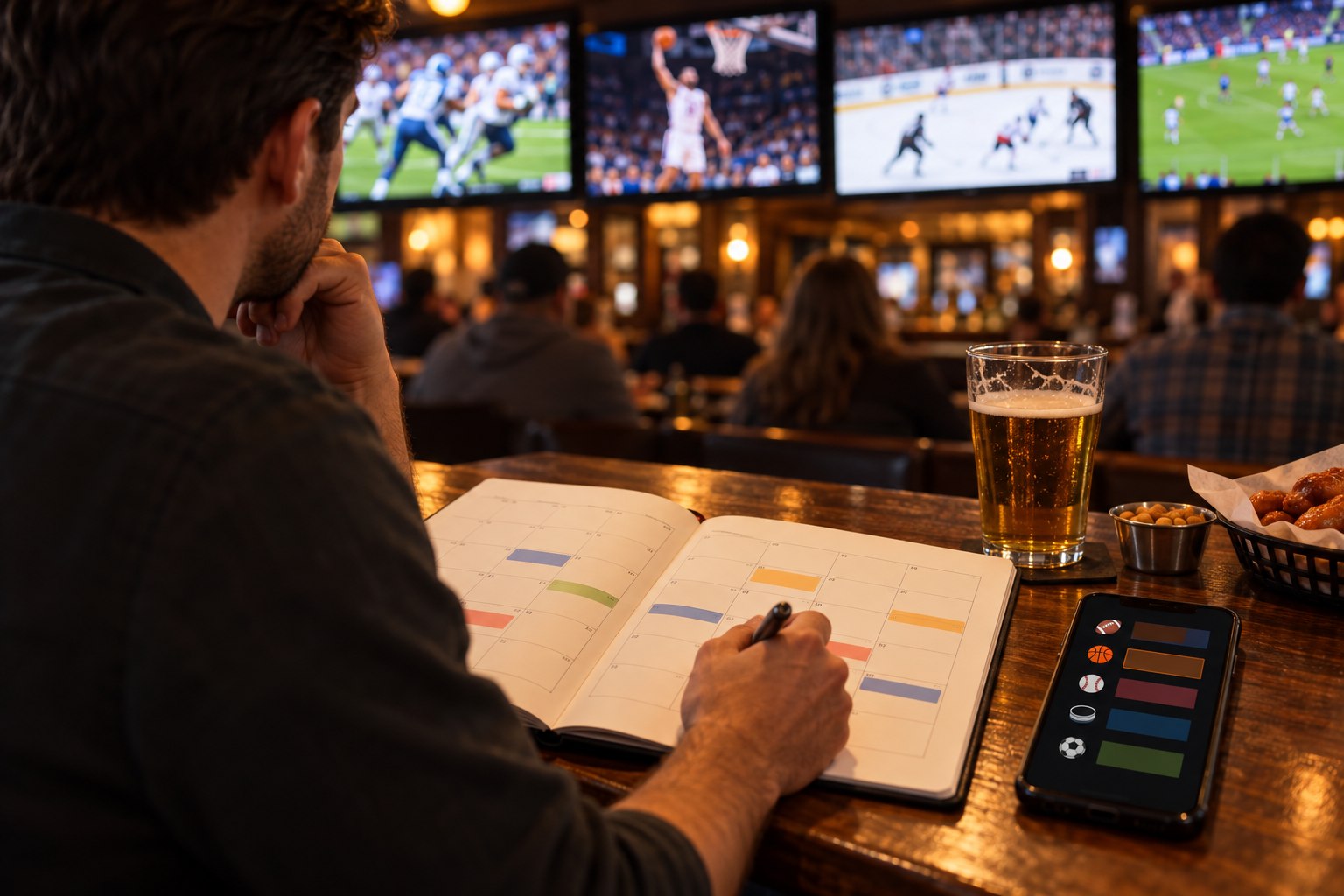
Imagine a venue with one large screen near the bar, two smaller screens above a crowded doorway and audio from only one feed. Fast basketball possessions remain readable from the center tables; hockey pucks may be harder to track from a distant stool; football works for groups that want to talk between plays. The highest-profile match is not necessarily the one the room can present clearly.
A practical watch-night choice also depends on whether a match has stoppages, how long a group expects to stay and whether the broadcast can legally be shown at the venue. A casual conversation group may enjoy the pauses of baseball, while a group following one international soccer team may prefer uninterrupted audio. Atmosphere comes from matching the event to the actual setting rather than declaring one sport best for everyone.
For a group with mixed knowledge of the rules, some sports provide intuitive short moments of excitement, while others become more engaging when one person explains tactics. A quick conversation about preferred noise level, anticipated game length and whether people expect to chat can prevent a poor match between sport and venue.
Commercial audio decisions matter as much as the number of screens. A bar might carry five games visually but make only one intelligible through its sound system. The practical test is whether the key moments are easy to follow from the seats actually available, not from the photograph on a venue’s website.
Weather and venue layout add another distinction between watching from a bar and attending in person. A baseball doubleheader may suit relaxed social plans but demand more time than a single basketball game. A playoff elimination match can make the final minutes compelling, yet a person unfamiliar with the tournament bracket may need context to follow what a tie or aggregate score actually means.
Where a screen changes the sport
Hockey offers speed and abrupt momentum
Line changes, defensive transitions, power plays and goaltending produce a quick visual game with fewer scores than basketball. The puck can be difficult to see on a small or badly angled screen.
Visibility and an unobstructed scoreboard matter in hockey. A close game can change when a goalkeeper is pulled late.
Baseball suits longer shared conversations
The pitch-by-pitch structure leaves room for food, conversation and storytelling about players. Fans can engage with counts, defense and bullpen choices without treating every minute as nonstop action.
A low-scoring game can be compelling for knowledgeable fans yet feel slow for first-time viewers. Extra innings can extend the outing.
Combat sports create distinct event peaks
Boxing and MMA cards present individual bouts with variable lengths and longer gaps between featured fights. The main event is not always guaranteed to start at the time shown on a promotional poster.
A full fight card and confirmed local broadcast access shape the viewing window. A stoppage may end a bout suddenly and change crowd expectations.
The commentary channel can matter as much as the screen
Two games with equally clear video can be very different viewing experiences in a crowded bar. Commentary, captions and screen placement change how easily a viewer can follow a match without uninterrupted audio.
Basketball in a loud room. The shot clock, score and possession are usually visible. Substitutions, fouls and replay explanations become harder to follow when the commentary cannot be heard.
Baseball on a distant screen. Long intervals between pitches can suit conversation, but a small count graphic and indistinct ball-strike display may make individual plays difficult to interpret.
Soccer with captions. Continuous play is visually legible, while substitutions, offside decisions and injury updates may rely more heavily on the feed’s text graphics or commentary.
Caption availability, sightlines from accessible seating, competing audio feeds and scoreboard readability are separate features. A venue that has many televisions can still provide a poor view if each screen is small, captions are obscured or the only readable display is across the room.
A group choosing a televised match
A group with two casual fans and three diehard supporters has a four-hour window. A nationally televised basketball game offers continuous scoring and a relatively defined viewing block; a Sunday football doubleheader offers more conversation windows but a much larger time commitment. A playoff hockey game creates a faster, more focused atmosphere if the group can see the puck clearly.
The most useful comparison is not simply league popularity; it is viewing rhythm, broadcast access, expected duration, visibility and the group’s preferences.
Group size, schedule and viewing conditions
Broadcast access is part of the experience
Regional sports networks, streaming exclusives, blackouts and commercial packages determine whether a venue can show a game legally. A schedule listing does not guarantee a particular establishment has the rights.
Network availability can determine the choice of venue for a particular event; screen count alone cannot overcome a blackout.
Match the sport to the group
Some groups want constant action; others want a long social gathering built around familiar rituals. A mixed-fandom table often benefits from a marquee game with clear scoring and uncomplicated broadcast access.
A good group experience also includes accessibility, seating, sound and a respectful atmosphere for people supporting opposite teams.
Pick by pace, screen and crowd
| Element | What it covers | What needs attention |
|---|---|---|
| Basketball | Frequent score changes | Fast action with late timeouts |
| Football | Big plays and tactical pauses | Long overall outing |
| Soccer | Continuous movement and atmosphere | Scoring may be sparse |
| Hockey | High speed and tension | Puck visibility matters |
| Baseball | Conversation-friendly pacing | Extra innings may extend viewing |
Viewing issues that change the experience
Practical questions for choosing a broadcast
- The group’s preference for a fast or interrupted game pace.
- Whether the venue has authorized access to the relevant channel.
- The possibility of overtime and a longer-than-listed broadcast.
- Screen distance and visibility for the chosen sport.
- Availability of the game’s audio feed.
- Conflicts between simultaneous kickoff windows.
- Shared-space etiquette toward other fans and venue staff.
- An enjoyable gathering does not depend on placing a wager.