

A season window is a planning cue, not a confirmed fixture. Check the actual matchup, start time and broadcast before organizing a group viewing.
A crowded American sports calendar
The NFL season anchors many American weekends
The regular season spans fall and winter, with playoffs leading to the Super Bowl early in the calendar year. Sunday afternoon windows, night games and holiday scheduling create distinct patterns for watch gatherings.
Specific kickoff times and playoff participants are confirmed by the league and broadcasters. Historical dates should not be recycled as future schedules.
March college basketball changes the social map
The men’s and women’s NCAA tournaments compress many elimination games into several weeks, creating overlapping viewing windows and quickly changing brackets. Casual viewers often connect through school affiliations and dramatic finishes.
New York betting restrictions still apply to events involving in-state college teams and to individual college player props, regardless of public interest.
The NBA and NHL have long postseasons
Basketball and hockey playoffs extend across spring and into early summer, with successive series that can change local viewing demand. Game times and even matchups become known as rounds advance.
A seven-game series is not guaranteed to use all seven dates. An event plan should rely on confirmed fixtures, not hypothetical deciding games.
Postseason schedule: The playoff calendar where game times and opponents may be finalized only shortly before the event.
A date on a calendar is not always a confirmed matchup
An NFL postseason weekend can be known long before the participating teams and exact kickoff windows are fixed. The same issue appears in knockout soccer, tournament basketball and some baseball series. A schedule that treats projected pairings as confirmed can send a group to a bar for the wrong game or time. Venue plans need the official fixture, its time zone and the correct broadcast outlet.
Events differ not only in audience size but also in structure. A championship final concentrates attention on one broadcast, while the opening rounds of a tournament may reward several screens and rapidly shifting priorities. Travel, daylight saving changes and exclusive streaming windows matter more to a real viewing plan than a generic month-by-month list of famous sporting names.
For viewers in the Eastern time zone, a European evening kickoff can land in the U.S. afternoon, while an event held on the West Coast can push a championship into a late night. Listings that omit the time zone are fragile even when the date is correct. Public holidays, daylight-saving transitions and international tournament scheduling also change the local viewing window. A useful calendar records both the event’s official schedule and the locally converted start time.
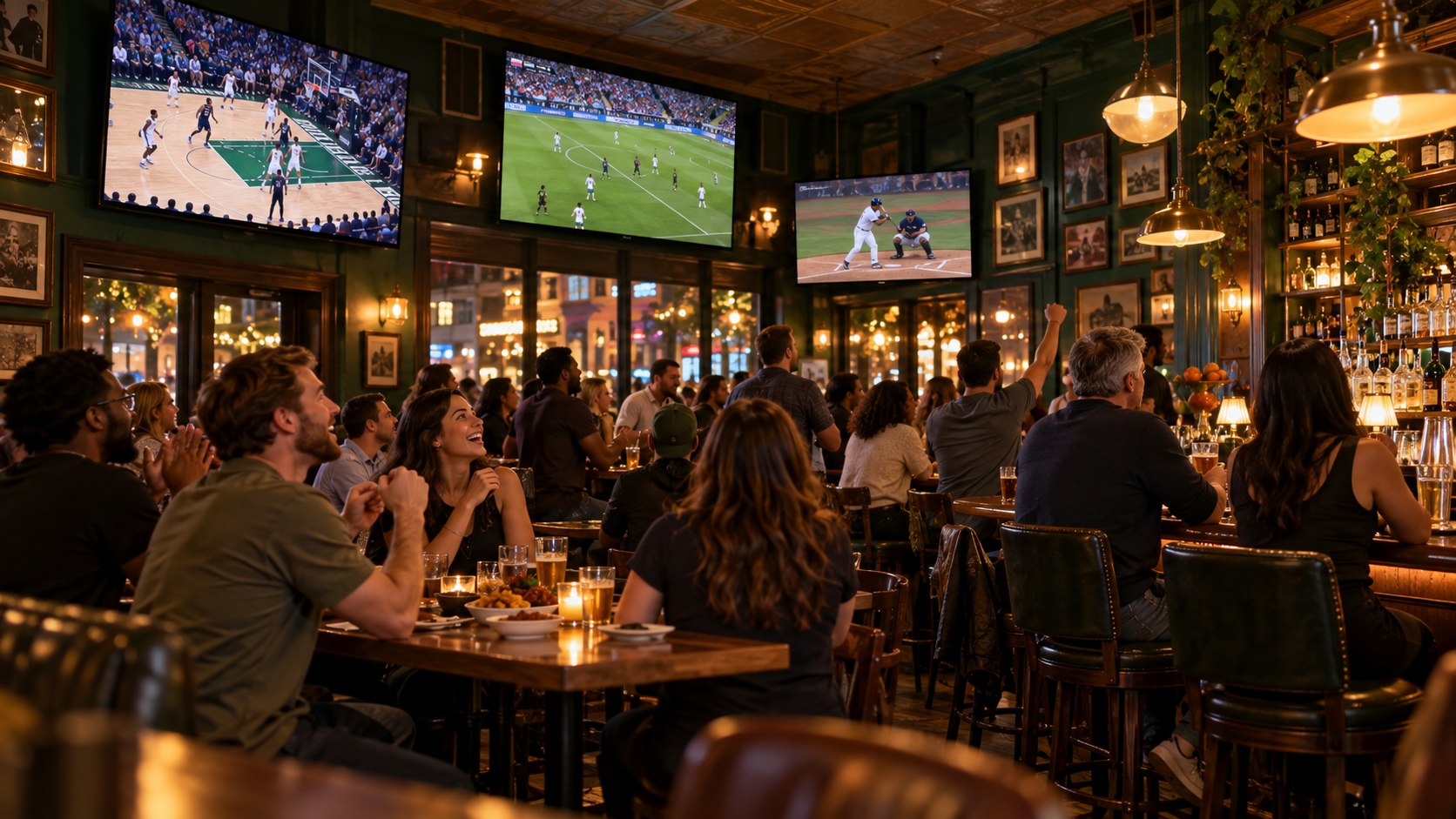
A multi-screen venue needs a different plan for a tournament with four simultaneous games than for a final with one marquee broadcast. The former rewards clear screen allocation and score updates; the latter benefits from consistent commentary and an uninterrupted focal screen. These are logistics, not measurements of which sport matters more.
International fixtures and screen time
Baseball links spring rhythms to October
MLB begins with a long regular season, followed by a postseason and the World Series. Fans may watch highlights during summer weekdays and prioritize complete broadcasts as elimination games arrive.
Rainouts and extra innings affect planning. The nominal start time rarely tells the complete story of when an evening will end.
Soccer crosses U.S. and international time zones
Domestic leagues, major European competitions, continental tournaments and World Cup cycles draw viewers at morning, afternoon and evening hours in the United States.
Commercial streaming rights differ by competition and can change between seasons, so a favorite venue may not carry every match.
Event formats and viewing windows
Fall / winter
NFL and major football windows
Postseason and holiday schedule changes
Late winter / spring
NCAA tournaments and league playoffs
Multiple simultaneous games
Spring / summer
NBA/NHL finales and baseball season
Series length can change timing
Summer / fall
MLB races and international events
Time zones and weather matter
Year-round
Soccer, tennis, golf and motorsports
Rights and event stages differ
A future tournament format changes the calendar
The men’s NCAA Division I tournament changes format in 2027. The NCAA’s 2027 tournament schedule states that the tournament will expand from 68 to 76 teams, with twelve Opening Round games on March 16-17, 2027, before the 64-team First Round on March 18-19.
| 2027 event stage | Published dates | Detail relevant to viewers |
|---|---|---|
| Selection Sunday | March 14 | Pairings become known after selections |
| Opening Round | March 16-17 | Twelve games in the expanded format |
| First Round | March 18-19 | The 64-team bracket begins |
| Final Four | April 3 and 5 | National semifinal and championship windows in Detroit |
The date and format are a dated event listing, not an evergreen annual rule. Team matchups and television assignments should not be represented as known before the organizers publish them. NFL-specific schedules belong to the league’s official schedule page.
Finals and playoff series need different plans
Event timing and confirmation status
Tennis and golf deliver extended event windows
Grand Slam tennis and major golf championships run across multiple days, often with several courts or groups active at once. Final-round and final-match timing can be less predictable than a single league kickoff.
A scheduled broadcast block may omit desired action or shift across channels. Competition stage and channel availability require separate confirmation.
Combat events and auto racing have their own pace
Major boxing or MMA cards can include preliminary and main-card sessions; Formula 1 and other racing series span practice, qualifying and the race itself. Time zones alter U.S. viewing schedules.
A race weekend is not one interchangeable event, and the advertised start of a card does not guarantee main-event timing.
How to build a realistic event calendar
Separate confirmed fixtures from likely seasonal windows. Include time zone, broadcast source, event stage and whether parallel games will compete for screens or attention.
A planning calendar becomes unreliable when it invents future matchups or assumes that a venue’s domestic television package includes every streaming exclusive.
A viewing calendar with unknown opponents
A Brooklyn group plans a spring sports weekend. A basketball playoff game could overlap with hockey, baseball and an international soccer final in a different time zone. A useful plan begins with confirmed start times and rights, then chooses which event deserves the main screen. An elimination game can attract more concentrated attention than an ordinary regular-season matchup even when both involve popular teams.
For any unconfirmed championship schedule, mark the date as tentative and check the governing organization when the bracket or series is finalized.
Calendar dates, broadcast windows and time zones
- Events identified as confirmed or tentative.
- New York local time as a shared reference.
- Broadcast availability and subscription rights.
- Allow for extra innings and overtime.
- Expect playoff game counts to change.
- Overlap between major event windows.
- The difference between spectator appeal and legally available betting markets.
- Refresh the calendar when official brackets appear.
Schedule details that change watch plans
Is the Super Bowl on the same date every year-
No. It occurs within the NFL postseason calendar, with the exact date and venue announced for each edition.
Can a playoff series end before Game 7-
Yes. Most best-of-seven series end when a team secures four wins. Later dates remain conditional until necessary.
Why do international matches start early in New York-
Time-zone differences turn afternoon events abroad into morning U.S. broadcasts, especially for European soccer and motorsports.
What changes between regular-season and championship viewing-
The stakes, simultaneous fixture count, network package and expected crowd can all change how people follow an event.
Do large sports events always have legal betting markets-
No. Jurisdictional eligibility and prohibited-market rules still apply. The popularity of an event does not override New York law.