
A Brooklyn watch night is shaped by the room, the mix of fans and the trip home. A neighborhood label alone says little about what a particular venue will show.
Neighborhood identity, without a single stereotype
A borough with many kinds of fandom
Brooklyn residents and visitors bring loyalties to New York franchises, out-of-town college programs and international soccer clubs. A neighborhood establishment may serve several communities across a single weekend.
Not every Brooklyn sports bar is a dedicated supporter venue. The preferred game can shift with the schedule and people in the room.
Screen layout is part of the culture
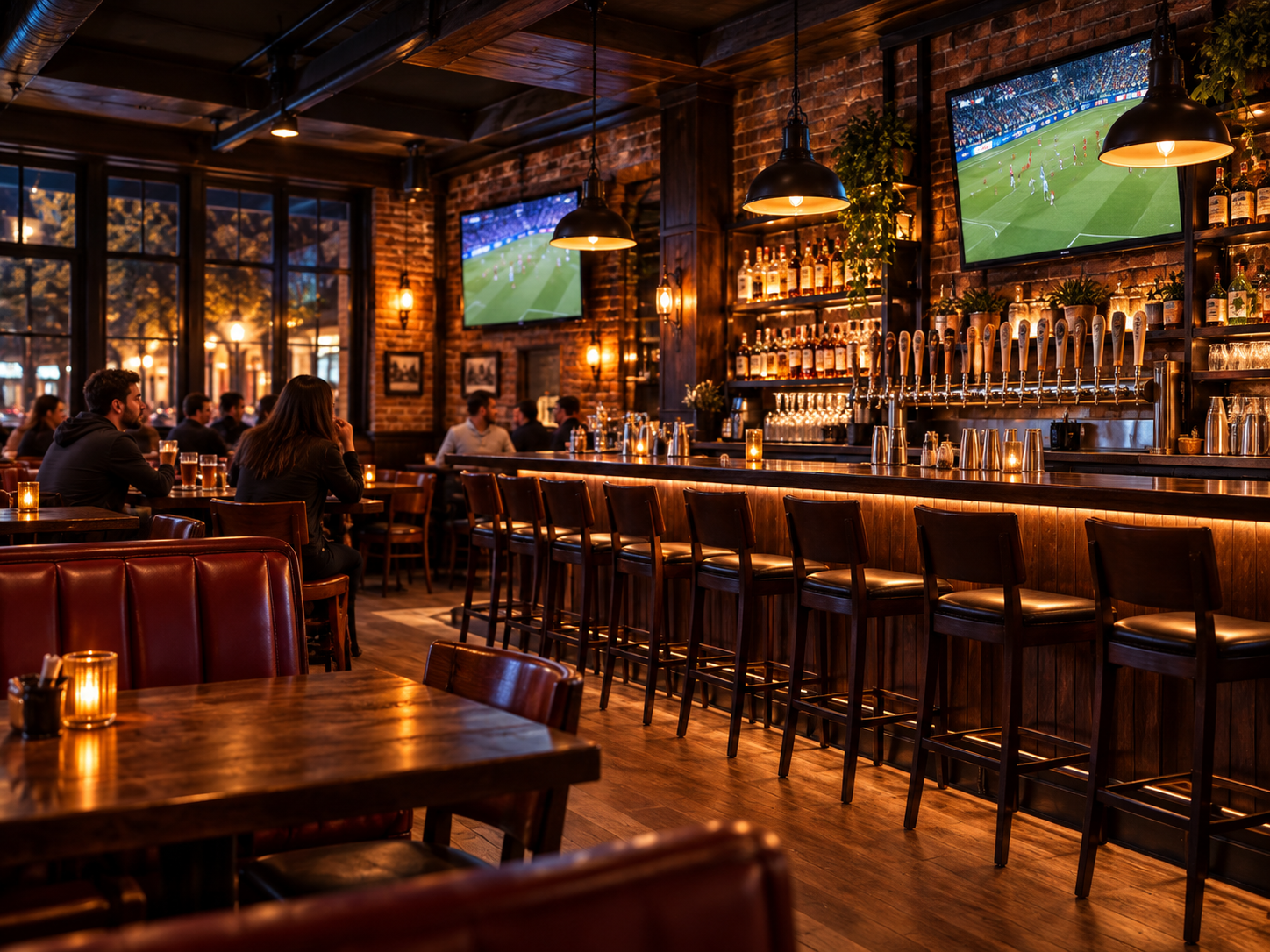
A long bar with multiple televisions favors simultaneous contests, while a compact room centered on one screen produces a communal focal point. Sightlines change whether fans follow one game or drift among scores.
Number of screens matters less than whether seats have usable views, key games have appropriate audio, and staff can manage requests.
Brooklyn sports bar culture: The borough’s diverse combinations of neighborhood pub customs, visiting teams, soccer communities, and New York professional sports fandom.
The practical geography of watching
Neighborhood scale changes the outing
Williamsburg, Park Slope, Bay Ridge, Greenpoint and other areas have different residential rhythms and transit patterns. A venue near a subway stop may become a meeting point for supporters arriving from several boroughs.
Neighborhood character is not a substitute for current business information. Schedules, ownership, hours and broadcast packages are venue-specific.
New York teams share air time with global leagues
NBA basketball, MLB baseball, NFL football, NHL hockey, Champions League and international tournaments can overlap. Early international kickoffs may create a very different atmosphere from prime-time U.S. broadcasts.
An establishment open in the evening may not open for a morning match. Listings and community assumptions need event-specific confirmation.
A late final whistle changes the trip home
The difference between a neighborhood bar and a destination bar often becomes clearer after the game. A match that runs into extra time, an overtime period or a prolonged review may end well after its scheduled broadcast window. Brooklyn covers distinct neighborhoods and transit connections; a short distance on a map does not guarantee an easy late-night journey.
A simple route may use a regular train or bus service at the planned arrival time.
Service frequency, transfers and crowd movement can be different after the original expected finish.
Step-free venue entry, readable screens and accessible transit connections are three independent requirements.
The same bar may suit a nearby regular but be impractical for visitors traveling across the borough after midnight. Specific opening hours, event broadcasts, transit service and accessible routes depend on the date and actual venue; no single Brooklyn-wide pattern establishes them.
Late-night travel is a separate venue feature
The MTA system information confirms that New York City Transit operates around the clock; that does not mean each subway route, station entrance or elevator is available at every hour. Brooklyn neighborhoods also differ substantially in which trains and buses connect them.
Match ends after midnight
Relevant transport fact: Service can be less frequent late at night
Information that a venue description cannot guarantee: Exact train arrival and route-specific overnight service
Attendee needs step-free travel
Relevant transport fact: An accessible route needs functioning elevators and an accessible connection
Information that a venue description cannot guarantee: Elevator status on the day
Match coincides with planned works
Relevant transport fact: Detours and substitute service can alter the return route
Information that a venue description cannot guarantee: Same-day service change and transfer time
An establishment’s advertised neighborhood does not establish the fastest journey for every guest. Current route information belongs to the MTA’s service status and accessibility tools, not to a fixed promise in an evergreen venue profile.
Two Brooklyn nights, two very different crowds
A midweek European soccer fixture can draw a morning or afternoon gathering shaped by overseas time zones. A Sunday NFL window can bring several fan groups together while bars juggle competing broadcasts. Both qualify as Brooklyn sports culture, yet their seating patterns, sound expectations and duration look very different. The venue’s regular audience and the match schedule may explain more than its neighborhood name alone.
When evaluating an actual sports bar, the useful questions are specific: Which screen carries the event- Will its commentary be audible- Does the venue have the appropriate commercial broadcast access- Are reservations or minimums required for a major event- A brand claim about “the best atmosphere” cannot answer those operational questions without current venue-level evidence.
Brooklyn’s varied transit and walking patterns shape how people arrive and leave. A group meeting after work may choose a venue near a train connection, while a weekend gathering prioritizes tables, sight lines and its regular crowd. That logistical distinction is more useful than a general claim that one neighborhood has the most authentic fan culture.
How people share a small screen-heavy room
How locals and visitors share space
Regulars may have longstanding arrangements with staff, while visitors expect a clear menu and a visible broadcast. A balanced room makes it easy to ask about audio or seating without displacing other patrons.
The best behavior is modest: ask once, avoid blocking screens, and understand that major local games may take precedence.
Food and drink are social rather than competitive features
A bar’s appeal can come from conversation, familiar snacks, accessible prices and being within walking distance. Constantly searching for a louder venue is not necessary to enjoy a major game.
Alcohol consumption is optional. Sports viewing and betting should not be confused with a requirement to spend money beyond the planned outing.
A crowded room with competing fan groups
On a Sunday with an early Premier League match, an afternoon NFL game and an evening NBA broadcast, one Brooklyn room may prioritize soccer supporters in the morning and switch to football later. Another may remain a neighborhood gathering place with multiple screens but little game audio. Both are sports bars, yet the experience reflects hours, broadcast rights, patrons and staff choices.
The useful questions are which match is actually being shown, whether sound is on, where the view is clearest, and what arrival time fits local transit.
What can vary from one venue to another
Multi-screen venue
Several games simultaneously
Sound may favor one contest
Single-focus room
Shared large-screen reactions
Harder to follow competing matches
Soccer-oriented gathering
Club-specific chants and kickoff routines
Early opening must be verified
Neighborhood regulars
Repeat social connections
Not necessarily a dedicated fan club
Event-night crowd
High energy for a final or derby
Seating may be limited
The line between fan culture and betting
Betting and New York alcohol regulations
New York’s State Liquor Authority distinguishes independent use of lawful mobile betting by patrons from a licensed venue promoting gambling activity on the premises. That distinction affects how a bar can market itself.
Pub watch parties, odds boards and informal bracket contests are not automatically permitted wagering operations. The applicable rules are specific.
A culture built from repeated games
The most enduring experience often comes from returning for a league’s regular fixtures and recognizing other fans. A major final draws a wider crowd, but routine weeknight games can build stronger neighborhood ties.
The atmosphere is shaped by real people and timing; generic citywide rankings cannot substitute for the match-specific experience.
Limits of a neighborhood venue listing
How to verify a watch-night listing
- A confirmed broadcast rather than an assumed channel listing.
- Event timing relative to venue opening hours.
- Whether the group values broadcast audio.
- Pick sightlines and seating before judging screen count.
- Space for regulars and supporters of other teams.
- Separation between watching games and organized wagering at the venue.
- Accurate transit information and current event details.
- A single visit offers limited evidence about an entire neighborhood.